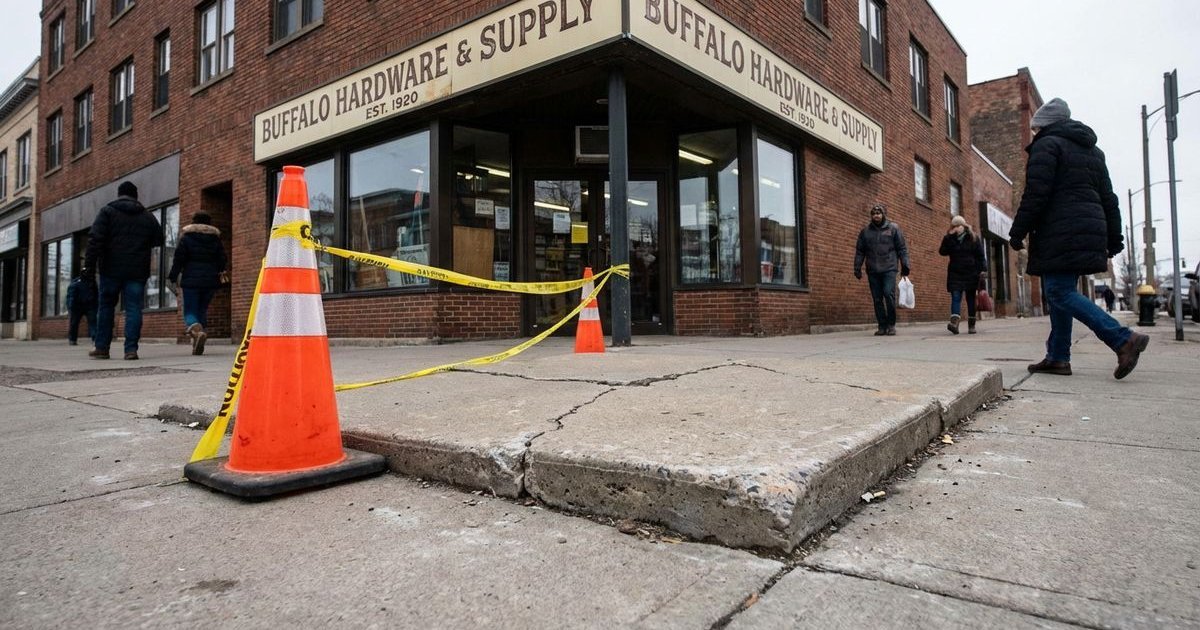
Property management in Western New York comes with a specific set of challenges. We know that between the freeze-thaw cycles of a Buffalo winter and the heavy foot traffic of summer, maintaining commercial walkways is a constant battle.
Ignoring these shifts in your concrete does more than just hurt your curb appeal. From our experience, it opens the door to serious legal and financial exposure.
A single heave in a sidewalk slab can trigger a chain of events involving insurance claims, legal fees, and regulatory fines.
As a Buffalo business owner, you have a legal duty to maintain safe premises for customers, employees, and visitors. Uneven concrete creating trip hazards can expose you to significant liability. Here’s what you need to know.
The Legal Standard: Premises Liability
New York law is very specific about the responsibilities of a commercial property owner.
We operate under a legal concept known as “duty of care.”
This means you are required to act reasonably to prevent harm to people on your property. Under the Buffalo City Code (specifically Chapter 413), the responsibility to maintain public sidewalks often shifts to the abutting property owner.
New York law generally requires property owners to:
- Maintain property in a reasonably safe condition
- Warn of known hazards
- Regularly inspect for dangerous conditions
- Fix hazards within a reasonable time
Trip hazards from uneven concrete fall squarely within these requirements.
The “Trivial Defect” Myth
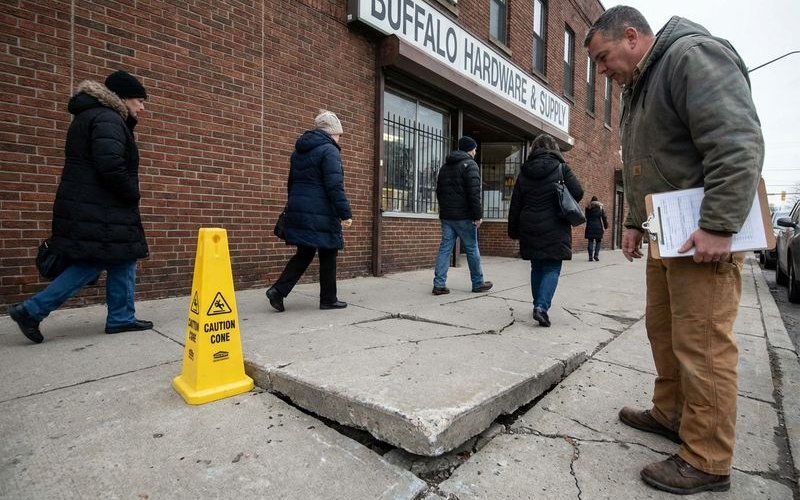
Many owners believe that small cracks are not a legal threat.
New York courts look at the “totality of the circumstances” rather than a strict measurement rule. While some may argue a defect is trivial, a court might decide that a 3/4-inch lip in a dimly lit parking lot constitutes a trap or nuisance.
The Real Cost of Trip and Fall Claims
The financial impact of a lawsuit extends far beyond the settlement amount.
We have seen businesses struggle to absorb the indirect costs that follow a slip-and-fall incident.
According to data from the National Floor Safety Institute, falls are a leading cause of emergency room visits. In the context of New York litigation, the costs escalate quickly.
- Average claim value: Settlements frequently range from $30,000 to $50,000 for soft tissue injuries.
- Medical bills: Surgery for a fractured hip or wrist can easily exceed $40,000.
- Lost wages: New York law allows claimants to recover income lost during recovery.
- Pain and suffering: Juries often award additional damages for emotional distress and physical pain.
- Legal fees: Defense costs can surpass $10,000 even if the case is dismissed before trial.
One significant claim can cost more than years of concrete maintenance.
What Makes You Liable?
Liability is not automatic just because someone falls.
Courts in Erie County and throughout the state consider specific factors to determine negligence.
1. Knowledge of the Hazard (Notice)
Legal responsibility hinges on “notice.”
Did you know about the uneven concrete? There are two types of notice. “Actual notice” means someone told you or you saw it. “Constructive notice” means the defect existed long enough that you should have discovered it during routine maintenance.
2. Reasonableness of Condition
Context matters immensely.
Is the trip hazard obvious? Generally, differences of 1/2 inch or more are considered hazardous. However, a 1/2 inch rise hidden by snow or located near a distracting store display is much more dangerous in the eyes of a jury.
3. Time to Fix
The clock starts ticking the moment a defect appears.
How long has the condition existed? If a freeze-thaw cycle in March caused a heave and you haven’t fixed it by July, a court is less likely to view that as reasonable behavior.
4. Warning Measures
Temporary solutions can mitigate risk.
Did you warn visitors while awaiting repair? Placing a safety cone or spray-painting the edge with high-visibility yellow paint demonstrates a good faith effort to protect the public.
ADA Compliance Issues
Federal regulations add another layer of strict liability.
Our team frequently helps clients correct violations of the Americans with Disabilities Act (ADA) before a complaint is filed.
The 2010 ADA Standards for Accessible Design are very precise regarding trip hazards:
- Vertical Changes: Any vertical change in level over 1/4 inch is strictly regulated.
- Beveling Requirement: Changes between 1/4 inch and 1/2 inch must be beveled with a slope no steeper than 1:2.
- Ramp Requirement: Any change greater than 1/2 inch requires a ramp.
Failure to comply can result in lawsuits and fines.
Department of Justice fines for a first-time ADA violation can exceed $75,000.
Trip hazards often violate ADA requirements.
Insurance Implications
Your Commercial General Liability (CGL) policy is your safety net, but it has holes.
We advise checking your specific policy exclusions regarding property maintenance.
Your commercial property insurance has limits:
- Deductibles: You pay the first dollars on claims, often $1,000 to $5,000 per incident.
- Premium increases: A single liability claim can trigger premium hikes of 20% to 50% upon renewal.
- Policy limits: Catastrophic injuries involving head trauma can result in judgments that exceed standard $1 million coverage caps.
- Coverage exclusions: Insurers may deny claims if they prove “willful negligence,” such as ignoring a known hazard for years.
Insurance protects you, but prevention is better than claims.
Documentation Matters
Winning a defense often comes down to paperwork.
If an incident occurs, documentation is crucial.
Before Incidents
Proactive records prove you take safety seriously.
- Digital Logs: Use a maintenance app or dated photos to prove you inspect the property.
- Repair Invoices: Keep records of all concrete leveling or patching work.
- Inspection Dates: Log the specific dates and times you walked the property.
- Warning Evidence: Take photos of any cones or paint used to mark temporary hazards.
After Incidents
Immediate data collection stops the narrative from spinning out of control.
- Incident Reports: Fill out a standard form immediately.
- Witness Statements: Get names and contact info while people are still on site.
- Photos of the Condition: Take clear pictures of the hazard from multiple angles with a ruler for scale.
- Weather Records: Note if it was raining or snowing at the time.
Good documentation helps defend against claims and shows you took reasonable care.
The Business Case for Proactive Repair
Fixing concrete is an investment in asset protection.
Consider concrete leveling as risk management:
| Factor | Without Leveling | With Leveling |
|---|---|---|
| Liability exposure | High (Negligence risk) | Low (Due diligence shown) |
| Insurance risk | Risk of Cancellation/Hikes | Stable Premiums |
| ADA compliance | Vulnerable to lawsuits | Compliant with Federal Law |
| Customer experience | Perception of neglect | Professional & Safe |
| Cost Basis | Unpredictable (Legal fees) | Fixed (Maintenance budget) |
The cost of leveling is far less than the cost of one serious claim.
How We Help Commercial Clients
Addressing these hazards does not require tearing out your entire sidewalk.
Our commercial concrete leveling services are designed for business needs. We use polyurethane foam injection, which is faster and cleaner than traditional mudjacking.
- Flexible scheduling: We work evenings, weekends, and overnight to suit your hours.
- Fast completion: Most projects are walked on within 15 minutes of completion.
- Documentation: You receive detailed before/after photos for your risk management files.
- Volume pricing: We offer competitive rates for shopping centers and large campuses.
- Ongoing programs: Maintenance contracts ensure you never miss a seasonal inspection.
Creating a Maintenance Program
Consistency is the enemy of liability.
Smart business owners implement regular concrete inspection.
Seasonal Checkpoints
Western New York weather dictates the schedule.
Spring Assessment (April/May):
- Inspect for frost heaves caused by winter freeze-thaw cycles.
- Check for damage from snowplows or salt erosion.
Fall Assessment (September/October):
- Seal open joints to prevent water infiltration before freezing begins.
- Identify trip hazards that could be hidden by future snow.
Quarterly Routine:
- Walk all exterior concrete surfaces.
- Note any changes or settling.
- Document with photos and dates.
- Address issues promptly.
Take Action Now
The most expensive trip hazard is the one you ignore.
Don’t wait for an incident to address trip hazards. The cost of proactive repair is far less than reactive claims.
Contact us for a free commercial property assessment. We’ll document all trip hazards and provide a comprehensive repair plan that protects your business.
Call (716) 261-2142 to schedule your assessment.